
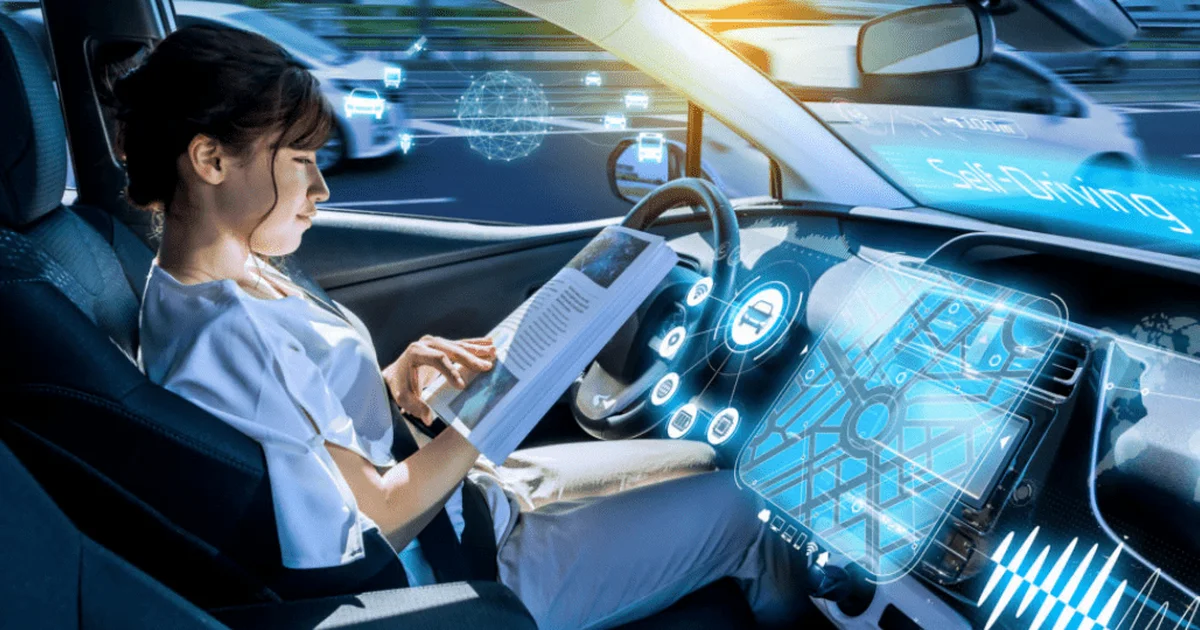
The global ADAS software market grew from $10 billion in 2024 to $12.1 billion in 2025, expanding at 21.2% annually. The broader autonomous driving software market — valued at $2.06 billion in 2025 — is projected to reach $6.95 billion by 2034. Asia Pacific leads with 45.5% of the global ADAS market; Europe is accelerating driven by regulation.
The regulatory context has changed the market fundamentally. The EU General Safety Regulation (GSR) mandated autonomous emergency braking (AEB), lane-keeping assist, and driver monitoring systems for all new vehicle types from July 2022 and for all new vehicles from July 2024. South Korea required ADAS features in all new vehicles by 2025. What was premium is now table stakes.
For software engineering teams building in this space — whether working at automotive OEMs, Tier 1 suppliers, or companies building ADAS components and software stacks — the challenge is building systems that are safe, real-time, and certifiable under automotive functional safety standards. This is a technically honest guide to what that looks like.
The SAE Automation Levels: Why They Matter for Software Architecture
SAE J3016 defines six levels of driving automation (L0–L5). The level determines the software architecture, the safety requirements, and the regulatory pathway.
| Level | Name | What the system does | Driver responsibility |
|---|---|---|---|
| L0 | No automation | Warnings only (FCWS, LDW) | Full control always |
| L1 | Driver assistance | One function automated (ACC or LKAS) | All other functions |
| L2 | Partial automation | Multiple functions simultaneously (ACC + LKAS) | Monitoring required |
| L3 | Conditional automation | System handles all driving in specific conditions | Must be ready to take over |
| L4 | High automation | No driver needed in defined operational domain | Not required in ODD |
| L4/L5 | Full automation | No driver needed anywhere | None |
Current production vehicles are primarily L2. L3 is entering production (Honda Legend in Japan, Mercedes DRIVE PILOT in Germany/US). L4 systems operate in limited operational design domains (Waymo in San Francisco and Phoenix, Cruise in San Francisco).
The engineering implication: L2 systems tolerate driver monitoring and override as a safety fallback; L3 and above must be safe without assuming driver intervention. Every level increase substantially raises the software safety requirements.
The Sensor Stack
ADAS perception relies on multiple complementary sensor modalities, each with different strengths. The production sensor stack for L2+ systems:
Cameras
Cameras provide the richest semantic information — lane markings, traffic signs, traffic lights, pedestrian detection, object classification. They are the primary modality for perception tasks where visual semantic understanding is required.
Monocular cameras are low-cost and widely deployed. Depth estimation from a monocular camera requires either motion parallax (the vehicle must be moving) or learned depth estimation models — neither is as accurate as stereo or LiDAR for absolute distance measurement.
Stereo cameras provide depth from disparity between two calibrated cameras, enabling accurate distance estimation for objects in range. Mobileye’s EyeQ platform is built around a single forward-facing stereo camera; the March 2025 Surround ADAS platform uses 11 surround-view cameras for 360-degree coverage.
Technical requirements: global shutter (not rolling shutter) for distortion-free capture of objects moving relative to the vehicle; HDR capability for simultaneous bright sky and dark shadow scenes; IP69K protection for automotive use; functional safety compliance (camera hardware + ISP must meet ASIL requirements).
Radar
Radar measures range and velocity directly, through rain, fog, and darkness. It is the primary sensor for adaptive cruise control (ACC) and automatic emergency braking (AEB) because these functions require reliable object detection in all weather conditions.
77 GHz imaging radar is the current production standard. 4D imaging radar (range, azimuth, elevation, Doppler velocity) — from companies like Arbe, Metawave, and Mobileye — provides point cloud-level resolution that approaches LiDAR density while retaining radar’s all-weather reliability.
The limitation: radar cannot resolve traffic signs, lane markings, or classify objects by type (pedestrian vs. cyclist vs. vehicle) with the reliability of cameras. Camera + radar fusion is the dominant L2 architecture.
LiDAR
LiDAR provides high-density 3D point clouds — direct distance measurement at centimetre accuracy — that enable detailed 3D scene reconstruction, free space mapping, and high-confidence object detection regardless of lighting conditions.
LiDAR’s limitation in production automotive deployment has been cost and durability. Mechanical spinning LiDAR (Velodyne HDL-64E) was $75,000 a decade ago. Solid-state LiDAR from Luminar, Innoviz, and Hesai — designed for automotive production volumes — has dropped to under $1,000 per unit at scale and is entering production vehicles (Volvo EX90, Audi Q8 e-tron with optional LiDAR).
LiDAR is currently uncommon in L2 systems (cost constraint) but standard in L4 development platforms and entering production L3+ systems.
Ultrasonic Sensors
Short-range distance measurement for parking assistance, blind spot monitoring, and low-speed collision avoidance. Inexpensive and robust; range limited to under 5 metres. Found in nearly all modern vehicles.
Sensor Fusion Architecture
No single sensor modality is sufficient for safe ADAS operation. Sensor fusion combines data from multiple modalities to produce a unified, reliable world model.
Early Fusion vs. Late Fusion vs. Mid-Level Fusion
Early fusion (raw data fusion): combine raw sensor data before any processing — project LiDAR point clouds onto camera image planes, combine radar detections with camera pixels. Theoretically optimal because the fusion model has access to all raw information. Practically challenging because sensors operate at different frequencies (camera at 30fps, LiDAR at 10–20Hz, radar at 20–50Hz) and require precise temporal synchronisation and spatial calibration.
Late fusion (decision-level fusion): each sensor processes independently to produce object detections; fusion combines the per-sensor object lists. Simpler to implement and more fault-tolerant (one sensor’s failure degrades gracefully). The limitation: information lost during per-sensor processing cannot be recovered at the fusion stage.
Mid-level fusion (feature fusion): sensors process to intermediate feature representations; fusion combines features before final object detection. The dominant approach in production L2+ systems — captures more information than late fusion, is more tractable than raw early fusion.
Tracking and Prediction
Sensor fusion output is fed into a tracking layer that maintains persistent object tracks — associating detections across frames to produce stable, consistent object representations with estimated position, velocity, and heading. Extended Kalman Filter (EKF) and Unscented Kalman Filter (UKF) are the classical approaches; learned tracking models (SORT, DeepSORT, ByteTrack) add appearance features for more robust association in crowded scenes.
Object tracks feed into a prediction layer that estimates future trajectories. Constant velocity models for short horizons (under 1 second); learned trajectory prediction models (social force models, transformer-based models like AgentFormer) for longer horizons where interaction with other road users matters.
HD Maps and Localisation
L3+ systems require high-definition maps — centimetre-accurate road geometry, lane topology, speed limits, and traffic control data — for localisation and path planning beyond what real-time perception provides. HD map providers: HERE HD Live Map, TomTom, Mobileye Road Experience Management (REM).
Localisation within the HD map uses LiDAR or camera-based map matching — aligning current sensor data to the stored map to determine the vehicle’s precise position within the lane.
The Planning and Control Stack
Above perception sits the planning and control stack, which decides what the vehicle should do and how.
Prediction (covered above) — what will other road users do?
Route planning — high-level path from origin to destination, typically using A* or Dijkstra on the road graph with traffic data.
Behavioural planning — high-level decision making: should the vehicle change lanes? Merge onto the motorway? Yield at the intersection? State machine approaches work for constrained scenarios; learned planners (reinforcement learning, imitation learning from human driving demonstrations) handle the combinatorial complexity of real-world driving behaviour better at higher automation levels.
Motion planning — generating a smooth, dynamically feasible trajectory that follows the behavioural plan while avoiding obstacles and respecting comfort constraints. Polynomial trajectory generation, model predictive control (MPC), and sampling-based methods (RRT, MPPI) are all used in production systems. MPC is dominant for L2 lateral and longitudinal control because it explicitly handles physical constraints (actuator limits, ride comfort).
Control — translating the planned trajectory into steering, throttle, and brake commands. PID control for simpler functions; MPC for integrated lateral + longitudinal control at L3+.
Functional Safety: ISO 26262 and SOTIF
Software for ADAS functions that can affect vehicle safety must comply with ISO 26262 (Functional Safety for Road Vehicles). ISO 26262 defines Automotive Safety Integrity Levels (ASIL A–D, highest risk) based on severity, exposure, and controllability of hazardous events.
AEB (Automatic Emergency Braking) — the function that activates braking without driver input — is typically classified ASIL C or D. The software architecture requirements for ASIL D include redundant channels, hardware self-test, and deterministic execution with bounded worst-case execution time.
SOTIF (ISO 21448 — Safety of the Intended Functionality) addresses a gap in ISO 26262: functional safety covers hardware and software failures, but SOTIF covers intended-function limitations — scenarios where the system performs exactly as designed but produces an unsafe outcome because the design did not anticipate the scenario (e.g., AEB false activation caused by a painted road surface pattern the perception model misclassifies as a vehicle).
The engineering implication: safety in ADAS is not just about preventing software failures. It is about ensuring the system’s intended behaviour is safe across the full operational design domain — including edge cases and out-of-distribution inputs that the perception models were not trained on.
Practical requirements for ADAS software teams:
- Design history file and software development lifecycle documentation from day one
- ASIL decomposition — identify which software components handle safety-relevant functions and apply appropriate development rigour
- Model-based safety analysis (FMEA, FTA, HARA) before implementation
- Hardware-in-the-loop (HIL) and software-in-the-loop (SIL) testing infrastructure for coverage of scenarios that cannot be safely tested on public roads
- Data collection and scenario logging pipeline for rare-event capture and model improvement
The NVIDIA DRIVE / Qualcomm Snapdragon Automotive Compute Layer
Production ADAS and autonomous driving software runs on purpose-built automotive compute platforms:
NVIDIA DRIVE Orin — 254 TOPS (tera-operations per second) of AI compute, designed for L2+ through L4. Deployed in production by Mercedes-Benz, BYD, Li Auto. The NVIDIA DRIVE software stack (DRIVE OS, DriveWorks, DRIVE AV) provides a framework for perception, mapping, planning, and control development.
Qualcomm Snapdragon Ride — modular compute platform scaling from L1 ADAS to L4. Used by BMW, Renault, Stellantis.
Mobileye EyeQ — purpose-built vision processing chip; EyeQ 6H for L2+, EyeQ Ultra for L4. Mobileye’s vertically integrated approach (chip + software + maps) is differentiated from the open-platform approaches of NVIDIA and Qualcomm.
The engineering relevance: automotive compute platforms dictate the software stack, the available development frameworks, and the deployment constraints. Building ADAS software for a specific OEM means building to their chosen compute platform.
How we approach this at Insoftex
The sensor fusion, perception pipeline, and safety certification architecture described in this article share structural characteristics with the real-time IoT and ML inference systems we have built in other safety-relevant industrial contexts. The design principle that carries across: the primary control loop must not share infrastructure with the analytics and monitoring stack. In our cloud-agnostic IoT framework for industrial environments, the real-time control path is isolated from the telemetry pipeline — not because the telemetry is unimportant, but because latency interference between the two workloads produces unpredictable control response times. ADAS applies the same isolation requirement at a much higher safety bar: in a vehicle, latency variance in the control path has ASIL implications, not just performance implications.
The safety certification architecture — ISO 26262 for automotive functional safety, SOTIF for autonomous system safety — is where we begin scoping for any ADAS software engagement. The safety integrity level required by the intended function determines the development process, the testing methodology, and the validation evidence needed before deployment. These requirements are not design additions; they are development constraints that shape what you can build and how you must build it. A team that designs a perception system without understanding its required ASIL level may have to rearchitect it when the ASIL requirement is clarified later — a significantly more expensive discovery than making it in the scoping phase.
The compute platform selection is the other dimension we scope early, for the same reason: the platform determines the available software stack, the deployment constraints, and the team’s access to platform-specific optimisation tools. ADAS software built targeting NVIDIA DRIVE Orin uses different development frameworks than software targeting Qualcomm Snapdragon Ride. Making the platform selection after the software architecture is designed — rather than as an input to it — produces rework. We treat compute platform as an architecture input, not an infrastructure decision made after the software is designed.
Building ADAS software components, perception systems, or automotive AI infrastructure? Our automotive engineering team works on ADAS-adjacent software, connected vehicle platforms, and automotive data pipelines. Start with a Product Pilot for architecture design, sensor fusion approach, and safety certification strategy in three weeks.
Frequently Asked Questions
What is the difference between ADAS and autonomous driving?
ADAS (Advanced Driver Assistance Systems) refers to L1 and L2 functions that assist the driver — automatic emergency braking, adaptive cruise control, lane-keeping assist, blind spot monitoring. The driver remains responsible for monitoring the road and taking over at any time. Autonomous driving refers to L3 and above — systems where the vehicle handles all aspects of driving in defined conditions, with no expectation of driver monitoring during automated operation. The engineering distinction matters enormously: L2 systems can be designed with the assumption that a monitoring driver will catch errors; L3+ systems must be independently safe because they cannot rely on driver intervention. This changes the sensor redundancy requirements, the software safety integrity level (ASIL) requirements, and the validation approach. Current production systems are predominantly L2. L3 is entering production in limited geographic and speed conditions (Mercedes DRIVE PILOT operates at under 60 km/h on motorways with HD map coverage). L4 without geographic restriction remains a research and regulatory frontier.
What programming languages and frameworks are used in ADAS development?
The ADAS software stack uses a specific set of tools shaped by real-time and safety requirements. C++ is the dominant language for production ADAS software — performance determinism, fine-grained memory control, and the maturity of safety-certified C++ compilers (GHS MULTI, Green Hills C++) for ASIL compliance. Python is widely used for perception model development, data analysis, and simulation scripting — but Python code does not run in production vehicle software due to the garbage collector's non-deterministic latency. ROS 2 (Robot Operating System 2) is the standard middleware for development and prototyping in automotive AI; for production deployment, OEMs and Tier 1s typically use AUTOSAR Adaptive (the automotive-grade OS and communication middleware for high-compute ECUs). Key frameworks: PyTorch and TensorFlow for model training; ONNX for model export and cross-platform inference; TensorRT (NVIDIA) and Snapdragon Neural Processing Engine for optimised inference on target hardware. Simulation tools: CARLA (open source), LGSVL, NVIDIA DRIVE Sim, CarMaker — used for scenario-based testing of perception and planning algorithms in virtual environments at a scale impossible on public roads.
What is the Operational Design Domain (ODD) and why is it critical?
The Operational Design Domain (ODD) defines the specific conditions under which an automated driving system is designed to function — road type (motorway, urban street, parking lot), speed range, weather conditions (clear, rain, fog, snow), lighting conditions (day, night, dusk), geographic area (mapped vs. unmapped), and traffic conditions. Defining the ODD precisely is a safety and regulatory requirement for L3+ systems, not an optional design decision. The Mercedes DRIVE PILOT L3 system, for example, has a tightly defined ODD: motorway with HD map coverage, speed below 60 km/h, daylight or clear weather, no construction zones. Outside this ODD, the system hands control back to the driver. The engineering implication of ODD definition: the system must have robust mechanisms for detecting when it is at the boundary of or outside its ODD, and for gracefully handing control back to the driver (or bringing the vehicle to a safe stop) when this occurs. ODD edge detection — the ability to recognise when the current situation is approaching the boundary of the designed operating envelope — is one of the hardest engineering problems in production L3 system development.
How is ADAS software validated before production release?
ADAS validation uses a multi-layer approach because public road testing alone cannot cover the rare, dangerous scenarios that systems must handle safely. The validation pyramid: (1) Software-in-the-loop (SIL) testing — algorithms running in simulation against virtual sensor data and virtual road environments. Used for functional testing, regression testing, and coverage of rare scenarios (child running into road, sudden tyre blowout, adverse weather). CARLA, NVIDIA DRIVE Sim, and IPG CarMaker are common simulation platforms. (2) Hardware-in-the-loop (HIL) testing — target hardware (the production ECU) running production software, with sensor signals injected by a real-time simulation platform. Tests the full software + hardware stack including timing, interrupt handling, and hardware failures. (3) Vehicle-in-the-loop (VIL) testing — production vehicle running production software in a closed test environment (proving ground), often with augmented reality overlays to inject virtual scenarios into real sensor streams. (4) Public road testing — millions of kilometres for statistical validation of edge case rates, with driver monitoring and remote oversight. Each layer has different coverage properties; automotive OEMs typically require coverage of specific scenario catalogues (Euro NCAP AEB protocol, ALKS test scenarios for L3) before production release.