
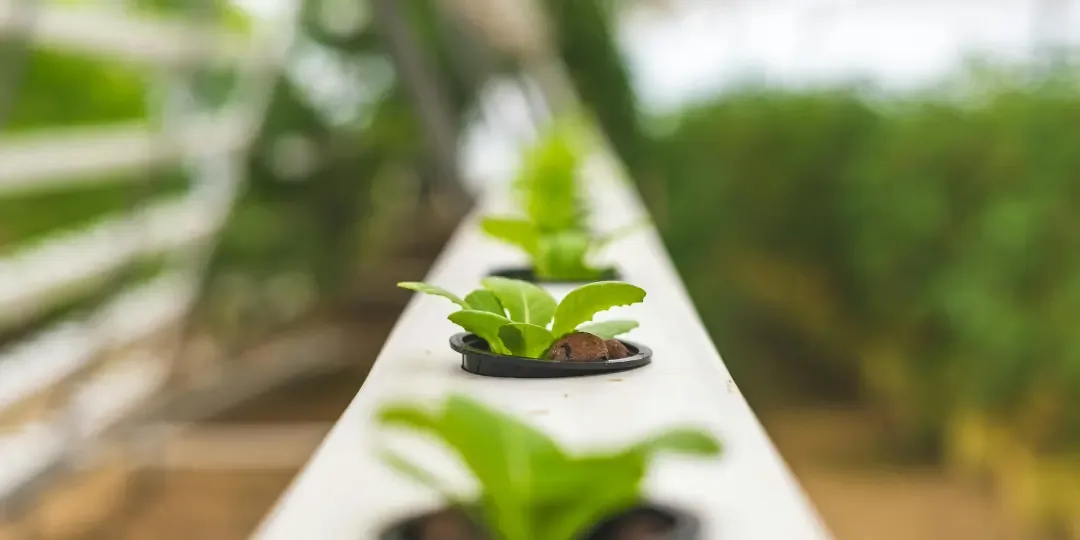
The AI in agriculture market reached $5.9 billion in 2025 and is projected to reach $61.3 billion by 2035 at a 26.3% CAGR (Future Market Insights). The precision farming segment — GPS-guided variable-rate applications, soil sampling, yield mapping, remote sensing — is valued at $11.38 billion in 2025, growing to $21.45 billion by 2032 (MarketsandMarkets). John Deere’s autonomous tractor service is in commercial availability for select row crop operations in North America, operating on a subscription model that would have been described as futuristic five years ago.
The agricultural software market is not a monolith. It spans equipment firmware (ISOBUS controllers in planting and harvesting equipment), farm management information systems (FMIS that aggregate field data and support decision-making), remote sensing platforms (satellite and drone imagery analysis), autonomous vehicle control systems, and increasingly, the carbon credit data infrastructure that sustainable agriculture mandates require. Each layer has distinct engineering requirements that generalist software development does not prepare teams for.
The Data Problem That Precedes Every AI Application
Agricultural AI is limited not primarily by model capability but by data quality and integration. A precision agriculture system that combines soil sensors, weather station data, satellite NDVI (Normalized Difference Vegetation Index) imagery, and equipment telematics to produce actionable recommendations is, at its core, a data integration system — and the integration challenges in agriculture are harder than they appear.
Temporal and spatial misalignment. A soil EC sensor samples every 5 seconds while driving across a field. A multispectral UAV image captures a 200-acre field in a single flight. A Sentinel-2 satellite pass has 10-meter resolution with a 5-day revisit cycle. Combining these data sources into a field-level analytics layer requires spatial interpolation, coordinate system normalization (WGS84 vs. local field coordinate systems), and temporal alignment that accounts for the different observation frequencies. Teams that skip this layer produce dashboards that show data, not intelligence.
Multi-vendor equipment silos. A large grain farm may run John Deere tractors with Trimble guidance, CNH planters with Precision Planting technology, and Raven irrigation controllers — each with a proprietary data ecosystem. ISOXML (ISO 11783-10) is the standard for task data exchange between FMIS platforms and equipment terminals; ADAPT (Agricultural Data Application Programming Toolkit, from the AgGateway consortium) provides the software abstraction layer for FMIS interoperability. Building agricultural software that claims to be equipment-agnostic requires ISOXML import/export and ADAPT plugin compliance — and testing against actual equipment from multiple manufacturers, not just the specification.
Connectivity gaps in the field. Agricultural operations run in areas without reliable 4G/5G coverage. An AI advisory system that requires a cloud connection to compute a variable-rate prescription cannot deliver that prescription at the time of field operation. Software must be designed offline-first: compute what can be computed at the edge (on-tractor or on-tablet), queue data for sync when connectivity is available, and handle multi-day data accumulation with conflict resolution when the same field receives multiple offline data writes.
Computer Vision for Crop Intelligence
Computer vision is the agricultural AI application with the most validated production deployments. The specific applications where accuracy has cleared the commercial deployment bar:
Disease and pest detection. Convolutional neural networks trained on multispectral drone imagery detect crop disease before visible symptoms appear in peer-reviewed 2025 studies — with classification accuracy above 95% for major cereal and fruit crop diseases when the drone imagery is from the correct growth stage and the training dataset includes the local cultivar variants. The engineering requirement that often trips up teams: a model trained on images from one geography does not transfer without retraining or fine-tuning to different soil backgrounds, different cultivars, and different lighting conditions. Agritech software must include a model calibration workflow that adapts base models to the specific field and crop context.
Yield estimation. Pre-harvest yield estimation using LSTM models combining weather station data, soil sensor readings, and satellite NDVI/NDRE indices achieves commercially useful accuracy for corn and soybeans (the test crops with the most training data). The practical use case: crop insurance underwriting, marketing contract negotiations, and logistics planning based on estimated harvest volume weeks before harvest occurs.
Weed mapping for precision herbicide application. Object detection models trained to distinguish crop plants from weed species at the individual plant level, running on camera systems mounted on field sprayers, enable site-specific herbicide application — spraying only where weeds are detected rather than blanket-treating the field. Precision herbicide application reduces herbicide use by 70–90% in applications where the weed pressure is spatially concentrated. This is the application that has attracted the most investment in precision agriculture AI in 2025–2026 due to its direct, measurable ROI.
The drone workflow. UAV-based imagery for precision agriculture requires a full pipeline: flight planning software (DJI Terra, Pix4D, DroneDeploy) for the survey pattern, photogrammetry processing to generate georeferenced orthomosaics and point clouds from overlapping images, spectral index calculation (NDVI, NDRE, SAVI) from multispectral imagery, and prescription map generation that converts index values to variable-rate application rates. Selling any piece of this pipeline without the others requires careful API design so the components can be combined with the customer’s existing tools.
ISOBUS and the Equipment Integration Layer
ISOBUS (ISO 11783) is the foundational standard for tractor-implement communication in precision agriculture. A planter, sprayer, or harvester with an ISOBUS-compliant Virtual Terminal (VT) can be connected to any ISOBUS-compliant tractor terminal and controlled via a standardized interface — without per-implement firmware for each tractor brand.
For software engineers building agricultural applications:
ISO 11783-10 (Task Data) defines the ISOXML format for exchanging work orders (prescription maps, field boundaries, operator assignments) between FMIS software and the equipment terminal. An FMIS that cannot export ISOXML cannot send variable-rate prescriptions to ISOBUS-compliant equipment. An FMIS that cannot import ISOXML “as-applied” data cannot record what actually happened in the field.
The prescription map format. ISOXML prescription maps define spatial zones using grid or polygon geometries, with application rates per zone per product. Generating prescription maps from AI advisory outputs (convert this NDVI map into a variable-rate nitrogen application prescription) requires understanding the specific parameter names and value ranges that each equipment manufacturer’s VT expects — which differ from the ISOXML spec in ways that require field testing.
AgGateway’s ADAPT toolkit abstracts over ISOXML, John Deere Operations Center format, Climate FieldView format, and other FMIS data schemas, providing a common object model for farm data. Teams building FMIS software should evaluate ADAPT as the integration layer rather than implementing ISOXML parsers directly — ADAPT is maintained by an industry consortium with active updates for new equipment data schemas.
Satellite Imagery: The Data Source That Changed Agricultural Scale
Satellite imagery has transformed what’s possible in agricultural analytics at scale — not because individual farm analytics are more accurate than drone imagery (they are not), but because satellite-derived insights can be generated for millions of acres simultaneously without requiring per-field flight operations.
The relevant satellite data sources in 2025:
- Sentinel-2 (ESA): free, 10-meter resolution, 5-day revisit cycle with two satellites. Standard reference for most academic agriculture research and the baseline for commercial applications where daily coverage is not needed.
- Planet Labs PlanetScope: commercial, 3-meter resolution, daily global coverage. The resolution and cadence that commercial crop monitoring applications actually use.
- Maxar WorldView-3: commercial, 0.31-meter resolution, useful for canopy-level analysis and precision crop count applications.
The engineering work in satellite-based agriculture is not accessing the imagery — it is processing it at scale. Radiometric calibration (converting digital numbers to surface reflectance), cloud masking, temporal compositing (combining multiple passes to fill cloud gaps), and the spatial analytics pipeline that converts reflectance values to agronomically meaningful indices are each a significant engineering workload. Cloud-native geospatial processing (Google Earth Engine, AWS Geospatial ML, Microsoft Planetary Computer) provides the infrastructure; the domain expertise to design the processing pipeline correctly still needs to be built by the engineering team.
Carbon Credit Data Infrastructure
The EU Farm Sustainability Data Network (FSDN) and voluntary carbon markets are creating a new data requirement in agricultural software: field-level records precise enough to support third-party audited carbon credit claims.
A carbon credit for soil carbon sequestration requires: baseline soil carbon measurements (at defined depths, with lab analysis), annual soil sampling at consistent locations, records of tillage operations (depth, timing, equipment), cover crop species and termination dates, fertilizer application type and rate, and irrigation water volumes. This is exactly the data that a well-instrumented precision agriculture operation already collects — but it must be stored in audit-ready form, with data provenance tracking that documents when each data point was recorded and on what equipment.
The engineering implication for FMIS software: data immutability and provenance are now commercial requirements, not nice-to-have features. A farm management system that allows retroactive editing of field records without an audit trail is disqualified from carbon credit programs and from the EU FSDN data submission workflows. Building append-only data models with cryptographic integrity verification for field records is the architecture that satisfies these requirements — and it is a retrofit for most existing FMIS platforms.
Autonomous Equipment Software: Beyond Remote Control
John Deere’s autonomous 8R tractors operating on a subscription model represent the commercial frontier of autonomous agricultural equipment. The software stack that enables autonomous operation:
Path planning and guidance. RTK-GPS (centimeter-accurate positioning) provides the localization foundation. Path planning for tillage and planting generates parallel swaths with automatic headland turns, taking into account field boundary shape and avoiding GPS shadow zones near treelines or terrain features that cause accuracy degradation.
Machine state monitoring. Autonomous operation requires continuous monitoring of equipment health — planter row unit downforce, seed singulation accuracy, plugging detection in any row unit — with automatic response to fault conditions (slow down, stop, alert operator). The software must distinguish between conditions that require immediate stop (mechanical failure) and conditions that require operator attention but allow continued operation (row unit performance decline).
Remote monitoring and intervention. Autonomous equipment in commercial deployment is monitored remotely by operators who manage multiple machines simultaneously. The telematics infrastructure — live video from equipment-mounted cameras, machine state telemetry at 1Hz, alert routing for fault conditions — is the interface through which human oversight is maintained at the operational scale that autonomous agriculture requires.
How we approach this at Insoftex
Agricultural software is a domain where understanding the physical operations — what a variable-rate prescription map is, what ISOBUS does, why offline-first architecture is not optional — is as important as software engineering expertise. Teams that build agricultural software without this domain knowledge consistently produce tools that look correct and fail to integrate with actual equipment in actual fields.
For clients building precision agriculture platforms, FMIS software, or agricultural analytics products, we scope the data integration architecture before any feature development — the ISOXML compliance layer, the offline sync model, and the coordinate system handling are the infrastructure that either enables or prevents every downstream application. Getting these right requires domain knowledge and field testing, not just software architecture.
For clients entering agriculture from adjacent domains (IoT, geospatial analytics, enterprise software), we provide the domain briefing and standards review that reduces the number of expensive field test failures: understanding what ISOBUS actually requires, what ADAPT does, and what a carbon-credit-ready data model looks like before the engineering investment is made.
Building precision agriculture software, agricultural IoT platforms, or farm data infrastructure? Our Product Pilot includes a domain architecture review — standards compliance requirements, data integration strategy, and offline-first design — before you invest in infrastructure that needs to work in a field with no internet connection.