
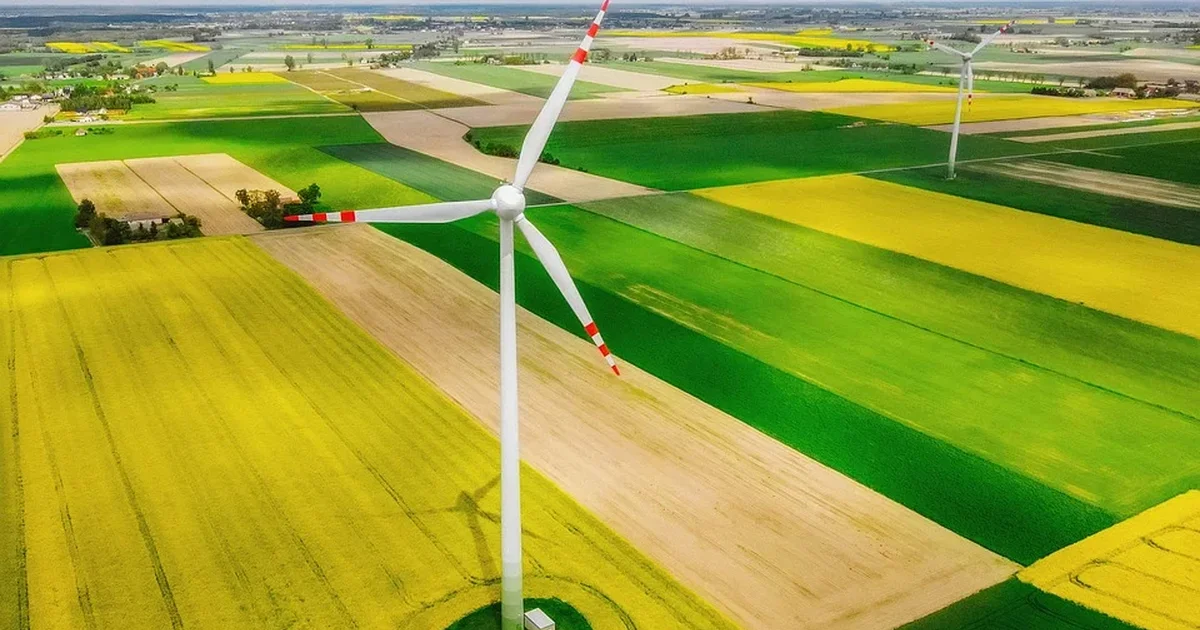
The global energy management systems market reached approximately $49 billion in 2025 and is growing at over 15% annually, driven by three converging forces: the expansion of distributed renewable energy assets (solar, wind, battery storage) that require intelligent coordination; decarbonisation commitments that make energy efficiency measurable and accountable; and the maturation of IoT sensor infrastructure that makes real-time energy telemetry economically viable at scale.
For engineering teams building energy management software, the market growth is secondary to a more specific challenge: the architecture of these systems is substantially different from standard SaaS product architecture. The data volumes are high, the latency requirements for control operations are strict, the integration standards are industry-specific, and the consequences of software failures include physical equipment damage and grid instability — not just service downtime.
This article covers the core architectural components, the AI use cases that are production-ready in 2026, and the integration standards that define interoperability in the energy sector.
The Core Architecture Stack
A production energy management system has four distinct layers, each with different requirements.
Layer 1: Edge (Device and Sensor)
The edge layer consists of physical sensors, meters, and control devices — IoT sensors on industrial equipment, smart meters, weather stations, inverter controllers, and battery management systems. This is the data source for everything above it.
Key considerations:
- Communication protocols: Industrial IoT uses Modbus, DNP3, IEC 61850, and OPC-UA rather than HTTP. Your data collection infrastructure must speak these protocols via industrial gateways or protocol translators before data reaches the cloud.
- Edge computing: For time-sensitive control operations (protecting equipment from damage requires sub-second response), edge processing is essential. Cloud-roundtrip latency (50–200ms) is too slow for protective relaying; decisions must be made at or near the device. Embed ML models on edge hardware for local inference.
- Data quality and gaps: Industrial sensors fail, network connections drop, and readings include noise and outliers. Your pipeline must handle missing data gracefully — either with imputation, gap flagging, or degraded-mode operation — rather than propagating bad data into dashboards and AI models.
Layer 2: Ingestion and Stream Processing
Raw device telemetry — potentially millions of data points per minute across a large asset fleet — must be ingested, normalised, and processed before it is useful.
Architecture pattern:
Device / gateway
→ MQTT broker (Eclipse Mosquitto / AWS IoT Core)
→ Message queue (Kafka / Kinesis)
→ Stream processor (Flink / Spark Streaming)
  → Real-time anomaly detection
  → Threshold alerting
  → Time-series aggregation
→ Time-series database (InfluxDB / TimescaleDB / AWS Timestream)
→ Feature store (for ML model serving)
Why a time-series database matters: Standard relational databases (PostgreSQL, MySQL) are not designed for the write patterns of sensor telemetry — high-frequency inserts, time-range queries, and downsampling. Time-series databases provide compression schemes, retention policies, and query engines optimised for this access pattern. At 1,000 sensors reporting every 10 seconds, a standard database becomes a performance bottleneck within weeks; a time-series database handles this volume efficiently.
Layer 3: AI and Analytics
This layer transforms raw telemetry into actionable intelligence: anomaly detection, predictive maintenance, load forecasting, and energy optimisation.
Layer 4: Visualisation and Control
Operator dashboards, alert management, SCADA HMI integration, and energy reporting interfaces. The key architectural decision here is whether to build a custom operator interface or integrate with existing SCADA/HMI software via standard protocols (IEC 61968 CIM, ICCP).
AI Use Cases That Are Production-Ready in 2026
Predictive Maintenance
Predictive maintenance is the highest-ROI AI application in energy infrastructure. The objective: detect developing equipment failures before they cause unplanned downtime or physical damage — scheduling maintenance at the optimal moment rather than on a fixed calendar or in response to failures.
The model architecture:
- Anomaly detection on continuous sensor streams (vibration, temperature, current, pressure) identifies deviations from normal operating signatures. Isolation Forest, autoencoders, and LSTM-based anomaly detectors are the primary approaches, each suited to different sensor patterns.
- Remaining Useful Life (RUL) prediction — given current sensor state and historical degradation patterns for a component type, estimate how many operating hours remain before failure. Gradient boosting models and LSTM networks trained on historical run-to-failure data are standard approaches.
- Alert routing — not all anomalies require immediate action. Route severity-classified alerts to the correct workflow: urgent (equipment shutdown risk) → immediate notification; non-urgent (efficiency degradation) → next scheduled maintenance review.
In solar and wind operations specifically, predictive maintenance for inverters, turbine gearboxes, and battery storage systems prevents failures that would otherwise require emergency dispatch — often to remote locations where the cost of an unplanned visit is 5–10x the cost of a scheduled one. Our SolarWatch case study demonstrates the pattern at production scale.
Load Forecasting
Accurate load forecasting — predicting energy consumption 24–72 hours ahead — enables more efficient grid operations, better renewable integration, and optimised energy procurement. An error of 5% in load forecasting can represent significant over- or under-procurement cost at utility scale.
Feature engineering for load forecasting:
- Historical consumption patterns (same time yesterday, same time last week, same time last year)
- Weather data: temperature, humidity, cloud cover, wind speed (often the highest-predictive features)
- Calendar features: day of week, holiday flags, time of day
- Demand response events: known periods where consumption was artificially suppressed
- Building occupancy data (for commercial/industrial loads)
Gradient boosting (XGBoost, LightGBM) outperforms simpler time-series models on most load forecasting tasks when features are engineered correctly. Deep learning approaches (N-BEATS, Temporal Fusion Transformer) provide marginal improvement for longer horizons or when spatial correlations between substations matter.
Energy Optimisation and Dispatch
For assets with controllable output — battery storage, flexible industrial loads, EV charging stations — AI-driven dispatch determines when to charge/discharge or shift loads to minimise cost or maximise revenue.
The optimisation approach depends on the complexity: for simple battery arbitrage (charge when prices are low, discharge when prices are high), rule-based or linear programming approaches are sufficient and more interpretable than ML. For complex multi-asset portfolios with grid constraints and market participation, reinforcement learning agents trained in simulation environments are increasingly used — but require extensive simulation fidelity and careful rollout with human override capability.
Grid Integration Standards: What You Must Know
Energy software that integrates with utility grids and grid operators must speak industry-standard protocols. These are not optional; they are how utility infrastructure communicates.
| Standard | What it covers | Where it applies |
|---|---|---|
| IEC 61968 / CIM | Common Information Model for utility data exchange | Grid topology, asset data, work orders |
| IEC 61850 | Substation communication and protection | Protective relaying, substation automation |
| DNP3 | SCADA communication for field devices | Meters, RTUs, field automation |
| OpenADR 2.0 | Automated Demand Response signalling | Demand response program participation |
| IEEE 2030.5 (CSIP) | DER communication standard | Solar inverters, batteries, EV chargers |
| OCPP | EV charger communication | EV charging station management |
For distributed energy resource management (DERMS) — systems that coordinate solar, storage, and EV charging across many sites — IEEE 2030.5 is the emerging standard for device communication, with OpenADR for demand response programme signals from the utility. Building to these standards from the start enables integration with utility programmes and third-party aggregators without rebuilding the communication layer.
SCADA: When to Build vs. When to Integrate
Supervisory Control and Data Acquisition (SCADA) systems are the operational backbone of energy infrastructure — they provide real-time monitoring and control for power plants, substations, and grid assets. Established SCADA platforms (Siemens SIMATIC, GE iFIX, Ignition by Inductive Automation) have decades of installed base and deep integration with field hardware.
The architectural decision for new energy software: build your own operator interface or integrate with existing SCADA?
Build a custom interface when:
- Your target users are not existing SCADA operators — they are asset owners, fleet managers, or C-suite energy managers who need a simplified analytics view
- Your product’s value is in the analytics and AI layer, not in control operations
- You are targeting distributed energy assets (solar rooftops, C&I batteries) where existing SCADA deployment is uncommon
Integrate with existing SCADA when:
- Your product augments existing utility or large-industrial operations that already have SCADA infrastructure
- Control operations (sending setpoints, acknowledging alarms) must happen through the existing operator workflow
- Your users are trained SCADA operators whose workflow you cannot interrupt
Most successful energy software products in 2026 do both: a modern analytics and AI interface for decision-making, with SCADA integration for control operations and alarm acknowledgement where existing systems are in place.
Data Architecture for Multi-Site Energy Portfolios
Energy portfolios — a company managing 200 solar sites, or a fleet operator managing 10,000 EV chargers — present a specific data architecture challenge: time-series data from many sites must be queryable both within a site (what happened at this site over time) and across sites (which sites had the highest curtailment last month?).
The multi-tenancy / multi-site pattern:
- Tag all time-series data with site ID, asset ID, and asset type from ingestion
- Partition time-series data by site to enable efficient single-site queries
- Build a site aggregation layer for cross-portfolio queries — pre-aggregated daily/hourly summaries reduce query cost for fleet-level analytics
- Separate operational data (high-frequency telemetry for monitoring and control) from analytical data (aggregated for reporting and ML training) with different retention policies
Our Wind Energy Monitoring Platform and Advanced Analytics Platform for Energy Data Processing both implement variations of this pattern at production scale.
How we approach this at Insoftex
Energy and greentech is one of our three core industry verticals, and the multi-site data architecture described in this article is one we have implemented in production across solar and wind monitoring engagements. The core architectural finding from that work: the separation between operational data (high-frequency telemetry for monitoring and control) and analytical data (aggregated for reporting and ML training) must be designed into the ingestion layer, not retrofitted after the operational system is running. Systems that write raw telemetry to a single datastore and then run analytics queries against it produce latency interference between the two workloads — dashboard queries that degrade real-time monitoring response times under load is the failure mode we see most consistently in systems that were not designed with this separation.
The IoT protocol complexity — OPC-UA for modern inverters and turbines, Modbus for legacy equipment, proprietary APIs for vendor-specific hardware — is where initial scoping most frequently underestimates effort. The protocol adapter layer that normalises all of these into a common internal data model is not a single-afternoon integration task; it requires device-specific testing, edge buffering for connectivity gaps, and a data quality validation step before any ML inference runs against the telemetry. We scope protocol integration explicitly in the Product Pilot for energy management engagements, because the protocol surface determines the ingestion architecture and the ingestion architecture determines everything downstream.
The forecasting and anomaly detection AI layer is where we see the most optimism in initial client conversations and the most recalibration during scoping. ML models for generation forecasting and predictive maintenance require clean, consistent training data — typically 12 to 24 months of co-located sensor and weather data with reliable timestamps. Teams that have six months of operational data from a pilot deployment are not ready to train a production forecasting model. We help clients understand the data maturity requirement before model development begins, so the timeline reflects the actual path to production AI rather than a model-first estimate that does not account for data preparation.
Building an energy management platform or AI-driven operations system for renewable assets? Our energy and industrial engineering team builds EMS, IoT pipelines, and predictive maintenance systems for energy operations. Start with a Product Pilot for architecture design, IoT integration scoping, and a build plan in three weeks.
Frequently Asked Questions
What is the difference between an EMS, DERMS, and SCADA system?
These three terms describe systems that operate at different layers of energy infrastructure. SCADA (Supervisory Control and Data Acquisition) is the operational layer — it provides real-time monitoring and control of physical energy assets (generators, substations, meters) through direct communication with field devices using industrial protocols like DNP3 and IEC 61850. SCADA is focused on safe, reliable operation of individual assets. An EMS (Energy Management System) sits above SCADA and optimises energy usage across a facility or portfolio — scheduling generation and loads to minimise cost or carbon, managing battery dispatch, and providing analytics. DERMS (Distributed Energy Resource Management System) is a newer category that specifically coordinates distributed energy resources — solar, batteries, EV chargers, flexible loads — across many sites on a utility distribution network, enabling them to participate in grid services and demand response programmes. A commercial building might deploy an EMS. A utility coordinating thousands of rooftop solar installations deploys a DERMS. Both may integrate with SCADA for control operations.
How much sensor data does a typical energy management platform process?
It varies significantly by asset type and monitoring frequency. A single wind turbine with comprehensive condition monitoring generates 50–200 data points per second across vibration, temperature, power output, pitch, and yaw sensors — roughly 4–17 million readings per day per turbine. A 50-turbine wind farm generates 200–850 million readings per day. A commercial building with smart meters and HVAC sensors typically generates 1,000–10,000 readings per minute. A fleet of 10,000 EV chargers reporting status every 30 seconds generates approximately 28,000 readings per minute. These volumes rule out conventional relational databases for raw telemetry storage. Purpose-built time-series databases (InfluxDB, TimescaleDB, QuestDB) with appropriate retention and downsampling policies are the correct infrastructure choice, often combined with a data lake (S3-compatible object storage) for long-term historical retention at lower cost.
What ML approach works best for predictive maintenance in renewable energy?
The answer depends on the failure mode you are predicting. For gradual degradation (bearing wear in a wind turbine gearbox, capacity fade in a battery), LSTM networks and temporal convolutional networks learn the degradation trajectory from continuous sensor streams and predict remaining useful life. For sudden failures with detectable precursors (inverter fault signatures, overheating patterns), isolation forest and autoencoder anomaly detectors identify deviations from normal operating signatures in real time. For equipment with limited run-to-failure data (new asset types, rare failure modes), transfer learning from similar equipment types and physics-informed neural networks that incorporate domain knowledge about failure mechanisms extend the approach beyond pure data-driven methods. In practice, production predictive maintenance systems use ensemble approaches — a rule-based alarm layer for obvious threshold violations, an anomaly detector for early warning, and a RUL predictor for maintenance scheduling — rather than a single model.
How do you handle the connectivity and data quality challenges of remote renewable energy sites?
Remote energy assets — offshore wind, rural solar farms, distributed battery storage — often have intermittent or low-bandwidth connectivity to the cloud. Engineering approaches: (1) Edge buffering — store telemetry locally at the site and batch-upload when connectivity is available, with sequence numbers and timestamps preserved so data can be correctly ordered on ingestion; (2) Edge inference — run anomaly detection and protective logic locally on edge hardware so monitoring and protection continue during connectivity loss, with decisions logged locally and synced when connectivity resumes; (3) Data quality flags — every reading is tagged with a quality flag (good / estimated / bad) so downstream models know which readings are reliable; (4) Imputation for gaps — statistical imputation (linear interpolation for short gaps, seasonal model for longer gaps) fills missing data for analytics and ML training, with the imputation clearly flagged so it is not mistaken for real measurements; (5) Adaptive sampling — during normal operating conditions, reduce sampling frequency to conserve bandwidth; increase to full resolution when anomalies are detected or control operations are in progress.