
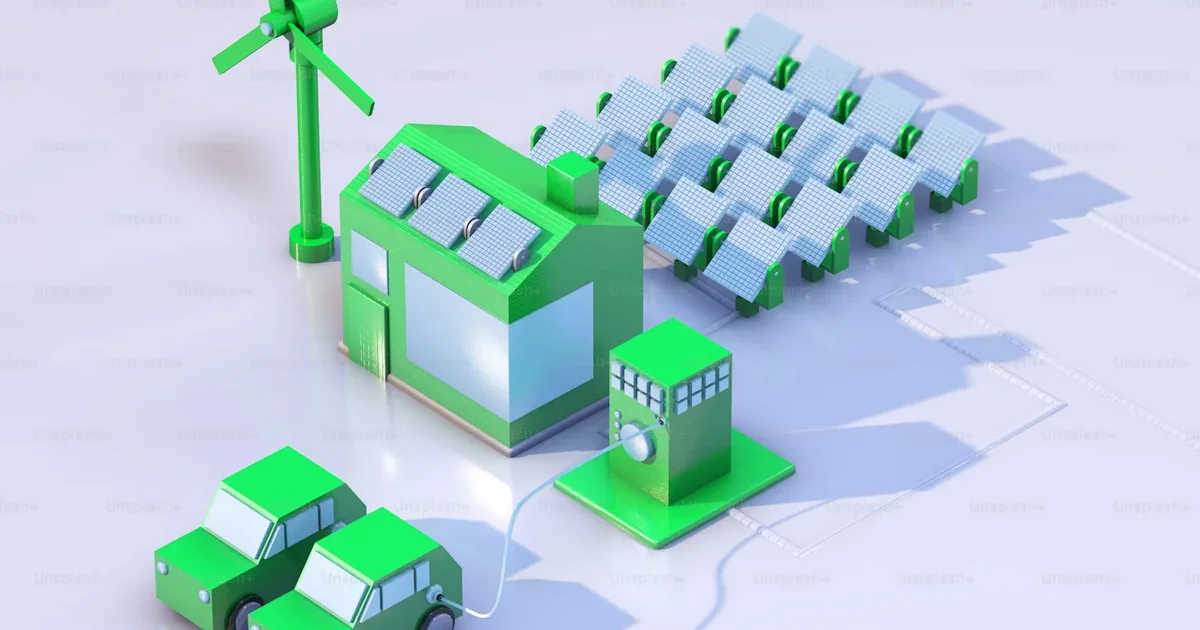
692 gigawatts of renewable energy capacity were added globally in 2025 — the largest annual increase in history. Renewables now represent 49% of all installed global power capacity, with solar and wind accounting for 96.8% of all new additions. Solar alone accounted for 75% of 2025 additions; in the United States, renewables represented 88% of all new electrical capacity added.
The bottleneck has shifted. The barrier to the energy transition is no longer the cost of solar panels or wind turbines — both have declined 90%+ over the past decade and continue to fall. The barrier is now software: grid integration infrastructure, AI-powered energy forecasting, intelligent demand management, and the software platforms that allow distributed energy resources to behave as a coordinated system rather than a collection of intermittent generators.
For engineering teams building in the clean energy sector, this is the most significant market context of the decade. The infrastructure is being built now; the software architecture decisions made in this window will constrain the energy system for the next 20 years.
The Software Stack Driving the Energy Transition
Grid Integration and Management Software
The fundamental challenge of renewable energy integration is intermittency — solar generates when the sun shines; wind generates when the wind blows. A grid with 50%+ renewable penetration must constantly balance variable generation against variable demand, with millisecond-level frequency regulation and second-to-second dispatch decisions.
The grid management software stack has three layers:
Energy Management Systems (EMS): software that monitors and controls generation, transmission, and distribution assets in real time. Traditional EMS platforms (OSIsoft PI, GE SCADA) are being extended with AI layers that improve dispatch decisions, predict asset failures, and optimise grid topology under changing conditions. AI-powered grid optimisation reduces energy wastage to under 13% compared to 15–20% in conventional grid operations — a savings of tens of terawatt-hours annually at scale.
Distributed Energy Resource Management Systems (DERMS): as solar panels, batteries, EV chargers, and smart thermostats proliferate at the grid edge, utilities need software that can aggregate and coordinate millions of small devices as virtual power plants. A DERMS platform manages device enrollment, state estimation, real-time telemetry, and dispatch commands — typically over OpenADR 2.0 or IEEE 2030.5 protocols. This is one of the fastest-growing software categories in energy.
Market and Settlement Systems: wholesale electricity markets clear in 5-minute or 15-minute intervals. Energy storage operators, renewable generators, and demand response aggregators need software that submits bids, receives dispatch instructions, measures performance, and calculates settlement. The integration requirements: market APIs (ISO/RTO-specific), metering data from utilities (Green Button / ESPI standard), and real-time telemetry from the physical assets.
AI and Machine Learning in Energy
AI applications in clean energy have moved from research to production across four use cases:
Renewable energy forecasting: predicting solar and wind output 15 minutes to 7 days ahead enables grid operators to pre-position flexible resources (storage, dispatchable generation, demand response) and reduces the cost of renewable integration. Machine learning models for solar forecasting — using satellite imagery, numerical weather prediction, and historical generation data — reduce forecast root mean square error by 15–20% compared to physics-based models alone. GAN-based approaches that generate ensemble forecasts provide uncertainty quantification alongside point predictions.
Google’s DeepMind partnership with PJM (the largest wholesale electricity market in the US), announced in December 2025, deploys AI tools for faster grid connection queue verification — directly addressing one of the primary bottlenecks to renewable project development.
Predictive maintenance for wind and solar assets: wind turbine gearboxes and main bearings are the highest-cost maintenance items in wind energy operations. Vibration analysis models deployed on edge computing hardware (Raspberry Pi, Jetson Nano) at the nacelle detect degradation 60–90 days before failure, enabling planned replacement rather than emergency repair. For solar, anomaly detection on inverter telemetry identifies underperforming strings, failed MPPTs, and soiling events that reduce output.
Battery storage optimisation: battery energy storage market reached $32.62–$50.81 billion in 2025, with the US deploying 18.9 GW and 51 GWh of new storage. Battery storage systems that participate in electricity markets need real-time optimisation algorithms that maximise revenue by deciding when to charge (low prices / excess renewable generation) and when to discharge (peak prices / grid stress events) — while respecting battery degradation constraints. Reinforcement learning and model predictive control (MPC) are the dominant approaches.
Carbon accounting and emissions optimisation: regulatory pressure from the EU Carbon Border Adjustment Mechanism (CBAM) and US voluntary carbon markets is driving demand for real-time carbon intensity tracking in industrial operations. Software that tracks scope 1, 2, and 3 emissions at asset and process granularity, calculates carbon intensity per unit of production, and identifies reduction opportunities is an emerging category.
Green Hydrogen Infrastructure Software
Green hydrogen — hydrogen produced by electrolysing water using renewable electricity — is the emerging solution for decarbonising hard-to-electrify sectors: heavy industry, shipping, long-distance aviation. The green hydrogen market grew from $2.79–$12.85 billion in 2025 to $13.56–$18.16 billion in 2026, with a 30–40% compound annual growth rate through the early 2030s.
The software stack for green hydrogen projects:
Electrolyser control and optimisation: industrial electrolysers operate within tight operating envelopes — temperature, pressure, current density, water purity. Control software must respond to variable renewable input (electrolysers can be turned up or down in seconds to follow renewable generation) while maintaining electrolyser longevity. MPC controllers optimised for electrolyser degradation physics are state of the art.
Hydrogen production management: tracking production volumes, purity certification, storage inventory, and delivery schedules. For projects selling into emerging hydrogen markets (EU hydrogen certificates, California LCFS), the software must also calculate and certify the carbon intensity of produced hydrogen — traceable to the specific renewable electricity generation used.
Market integration: hydrogen price markets are still forming (spot markets exist in the EU; US market is primarily bilateral contracts), but the software infrastructure for hydrogen trading and settlement is being built in parallel with the physical infrastructure.
Architecture Patterns for Energy Software
Energy software has specific architectural requirements that differ from typical enterprise applications.
Time-series data at scale: energy telemetry — generation, consumption, grid frequency, battery state of charge — is high-volume, time-indexed, and requires retention periods measured in years for regulatory and settlement purposes. TimescaleDB (with PostgreSQL compatibility), InfluxDB, and Apache Druid are the database choices. Cloud-managed options (Azure Data Explorer, InfluxDB Cloud, AWS Timestream) reduce operational overhead for teams without dedicated infrastructure capacity.
Real-time control loop latency: grid frequency regulation operates on sub-second timescales. Software in the primary control loop must guarantee response times — 100ms or under for frequency response, seconds for economic dispatch. This requires purpose-built real-time control software separate from the analytics and reporting stack. A common architecture failure: building the analytics dashboard on the same database and API as the control system, such that dashboard queries degrade control response times under load.
Standards compliance: the energy sector has more data exchange standards than almost any other industry. Key ones for software engineers: OPC-UA and IEC 61850 for substation communication; OpenADR 2.0 and IEEE 2030.5 for demand response / DERMS; OCPP 1.6 / 2.0 for EV charging; Green Button / ESPI for utility meter data; CIM (Common Information Model / IEC 61968/61970) for grid topology data. Design for standards from the start — retrofitting standards compliance into an existing integration is expensive.
Cyber-OT security: energy infrastructure is critical national infrastructure. IEC 62443 defines the security zones and conduits model for industrial control systems. NERC CIP standards apply to bulk electric system assets. Software deployed in operational technology environments in energy must meet a higher security bar than typical enterprise software — network segmentation, cryptographic device identity, audit logging of all control actions, and formal change management for software updates.
How we approach this at Insoftex
Energy and greentech is one of our three core industry verticals. Our SolarWatch platform is a production solar monitoring system built on the IIoT-to-cloud architecture this article describes: edge telemetry collection, SCADA integration, anomaly detection for panel performance degradation, and a real-time monitoring dashboard. The wind energy analytics system adds turbine-level performance tracking with predictive maintenance signals. Both use the same event-driven streaming architecture.
The AI assistant for hydrogen and renewable energy is a different architecture: a RAG-based knowledge retrieval system for hydrogen production and energy transition questions, grounded in a managed domain corpus. It illustrates a category of energy AI deployment that does not appear in asset monitoring — decision support for engineers and procurement teams working with novel energy technologies where institutional knowledge is sparse and evolving.
The standards compliance challenge is one we encounter most directly in integration work. OPC-UA for SCADA connectivity and OpenADR for demand response both require protocol-specific handling that is often underestimated in initial scoping. We address protocol requirements as part of architecture design, not as integration details to be worked out during build, because protocol choice affects the data model and the cost of adding new device types later.
Building software for renewable energy, grid management, or energy storage? Our energy and industrial engineering team works on IoT pipelines, SCADA integration, DERMS, and AI forecasting for operational environments. Start with a Product Pilot for standards compliance architecture and IIoT integration design in three weeks.
Frequently Asked Questions
What is a DERMS and why is it becoming important?
A Distributed Energy Resource Management System (DERMS) is software that allows a utility or grid operator to monitor and coordinate millions of distributed energy devices — rooftop solar panels, home batteries, EV chargers, smart thermostats, commercial HVAC systems — as if they were a single flexible resource. As the share of distributed solar and storage on the grid grows, the ability to dispatch, curtail, or shift these resources becomes operationally critical for grid stability. A DERMS platform typically handles device enrollment and authentication, real-time telemetry collection, state estimation (what is each device currently doing?), and dispatch commands (charge battery now; reduce EV charging by 20%). OpenADR 2.0 is the most widely deployed communication standard for demand response signals; IEEE 2030.5 (formerly SEP 2.0) is the emerging standard for more complex bidirectional device management. The DERMS market is growing rapidly because it is the software layer that makes demand flexibility a reliable grid resource — allowing utilities to avoid expensive peaker plant construction by shifting load rather than adding generation.
What is green hydrogen, and what role does software play in its production?
Green hydrogen is hydrogen produced by splitting water into hydrogen and oxygen using electricity — a process called electrolysis. When the electricity comes from renewable sources (solar, wind), the produced hydrogen has near-zero carbon emissions. It is called 'green' to distinguish it from grey hydrogen (produced from natural gas, which emits CO2) and blue hydrogen (grey hydrogen with carbon capture). Green hydrogen is a target for decarbonising industrial processes that cannot be directly electrified: steel production, cement, ammonia (fertiliser), shipping, and long-haul aviation. Software plays three roles: (1) electrolyser control and optimisation — managing the operating parameters of the electrolyser to maximise efficiency and longevity, particularly when responding to variable renewable input; (2) production tracking and carbon certification — proving the carbon intensity of produced hydrogen for regulatory and market purposes requires traceability from renewable electricity source to hydrogen molecule; (3) market and logistics integration — scheduling hydrogen delivery, managing storage inventory, and participating in emerging hydrogen spot markets. The green hydrogen market is growing at 30–40% annually, and the software infrastructure is being built in parallel with the physical infrastructure.
How does AI improve renewable energy forecasting, and why does that matter?
Renewable energy forecasting — predicting how much solar and wind power will be generated at a specific location over the next 15 minutes to 7 days — matters because grid operators must balance generation and demand at every moment. When generation is uncertain, operators keep expensive flexible reserves (gas peakers, battery storage) on standby to cover potential shortfalls. Better forecasts reduce the reserve margin required, which directly reduces costs and emissions. AI improves forecasting by combining multiple data sources — satellite cloud cover imagery, numerical weather prediction (NWP) model output, historical generation data, and local sensor measurements — in ways that physics-based models cannot. Machine learning models trained on these combined inputs reduce forecast error (measured as RMSE — root mean square error) by 15–20% versus NWP-only approaches. GAN-based ensemble forecasting generates not just a point prediction but a distribution of possible outcomes, giving grid operators uncertainty information they can use in dispatch decisions. Beyond 4-hour horizons, the dominant error source is weather prediction uncertainty; below 1-hour horizons, satellite image processing and local sensor data dominate. Different model architectures apply at different forecast horizons.
What standards should energy software engineers know?
Seven standards that recur across energy software projects: (1) IEC 61850 — substation communication standard for protection, control, and monitoring of electrical substations. Required for software that interfaces with grid-level assets. (2) OPC-UA — industrial data exchange standard used for solar inverter, wind turbine, and electrolyser telemetry (see our manufacturing article for detail). (3) OpenADR 2.0 — the standard communication protocol for demand response events between utilities and commercial/industrial customers. Required for DERMS and demand flexibility software. (4) IEEE 2030.5 (SEP 2.0) — the emerging standard for utility-to-device communication, particularly for home energy management (EVSE, storage, smart appliances). California requires IEEE 2030.5 for smart inverters. (5) OCPP 1.6 / 2.0 — Open Charge Point Protocol for EV charging station communication between charge points and central management systems. (6) Green Button / ESPI — standard for utility meter data access. Required for energy management software that aggregates consumption data from utility accounts. (7) CIM (IEC 61968/61970) — Common Information Model for representing grid topology — generation assets, transmission lines, substations, loads — in a standard data format. Required for software that integrates with utility network models.